

Hindu Ngaben Ceremony
- Melisandra Yunita

- Dec 29, 2018
- 3 min read
Updated: Mar 1, 2023
The cremation ceremony, also known as the Balinese Ngaben Ceremony, is a ritual carried out in Bali to usher the dead into the hereafter.
The deceased's body will be positioned as if it were sleeping, and the family will continue to treat it as such. There is no need to weep because the departed is only momentarily gone and will either be reborn or find eternal rest in Moksha (freed from the cycle of reincarnation and death).
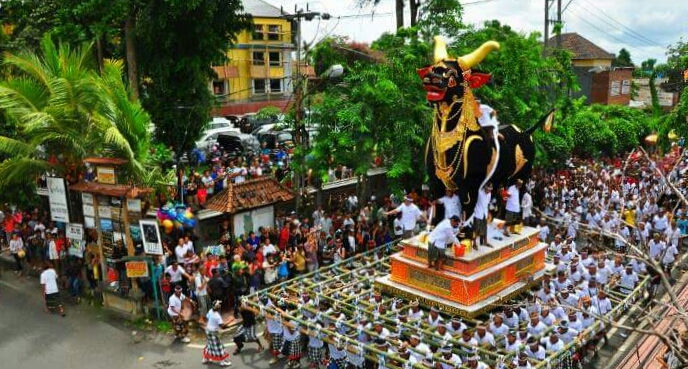
On ceremonial days, it is always a good idea to consult a specialist to determine the exact day of the Ngaben ceremony. The deceased person's body is submerged in coffee on the ceremonial day. This coffee is kept in a "ox" sarcophagus, which is shaped like a buffalo, or in a "wadah," which is a temple constructed of paper and wood. A procession will transport the buffalo or temple building to the location. There is no straight line in the Ngaben procession. Evil spirits will be confused as a result, and they will stay away from the deceased.
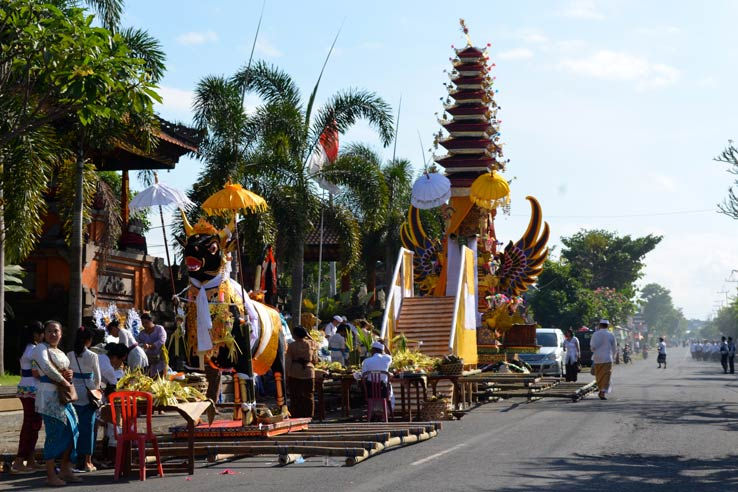
The most significant ritual in Bali is called Ngaben.
because the human body is made up of 10 fundamental components. One of the five elements that make up Panca Maha Butha, often known as the five fundamental components of the cosmos: soil (Bumi), water (Apah), fire (Teja), water (Bayu), and air (Akasa) (ether or space). The other five components of memory are what we refer to as the Panca Tan Matra and include: Double (from the nose or scent), Taste (from the tongue), Fine (from the eyes), Sparsa (from the senses skin), and Word (from the ear).

The atman, or spirit, still needs to have a portion of the element that we refer to as the Five Carmendria, or the five big sins that we are currently committing, removed after everything has been burned and cremated. The Five Karmendria are the following: Padendria (sins resulting from our manner of life), Payundria (sins resulting from our food in life), Panendria (sins resulting from our formed hands), Upastenindia (sins resulting from our sexual activity), and Wakindriya ( sins from our speech or mouth).

The ritual we refer to as "Nyekah" purges such sins. The Nyekah ceremony is essentially a summary of our crimes, not a promise that we will be cleansed of them afterward. And the outcome will be the "atman" or spirit's report, which will indicate whether or not he will be reborn. We refer to this report as Karma Wasana. There are various layers of "wrapping" that need to be removed by completing Ngaben and Nyekah rites, therefore "Ngaben" is essentially enabling the atman to advance as soon as possible to "Brahman" or God.
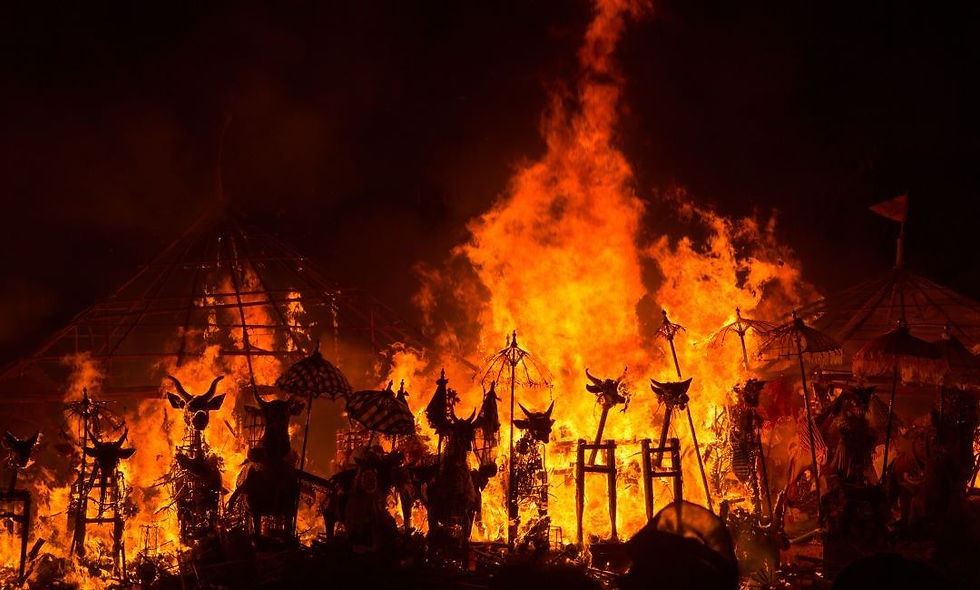
Ngaben and Nyekah are good ideologies that teach us to always create positive karma in life for those of us who are still alive. Our Karma Wasana or reports can therefore guide us to Moksatham Jagadhita Ya Ca Ithi Dharma or being free from reincarnation. It also demonstrates to us that Hinduism is not about going to paradise but rather learning how to unite with Brahman, or God. Many tourists who are traveling to Bali are drawn to it by its uniqueness and want to experience it firsthand.
#seminyak #ubud #travel #sunset #sunrise #wonderful_places #beautifuldestinations #beautifulhotels #passionpassport #earthpic #indonesia #nusapenida #nusalembongan #uluwatu #wonderfulindonesia #visitindonesia #baliisland #baliindonesia #balivacation #canggu #ubudbali #ilovetravel #aroundtheglobe #instatravels #travelmoments #livetotravel


Comments